Smarter Therapy Protocols, Built by Automation
Automated Treatment Planning System for Streamlined Clinical Care
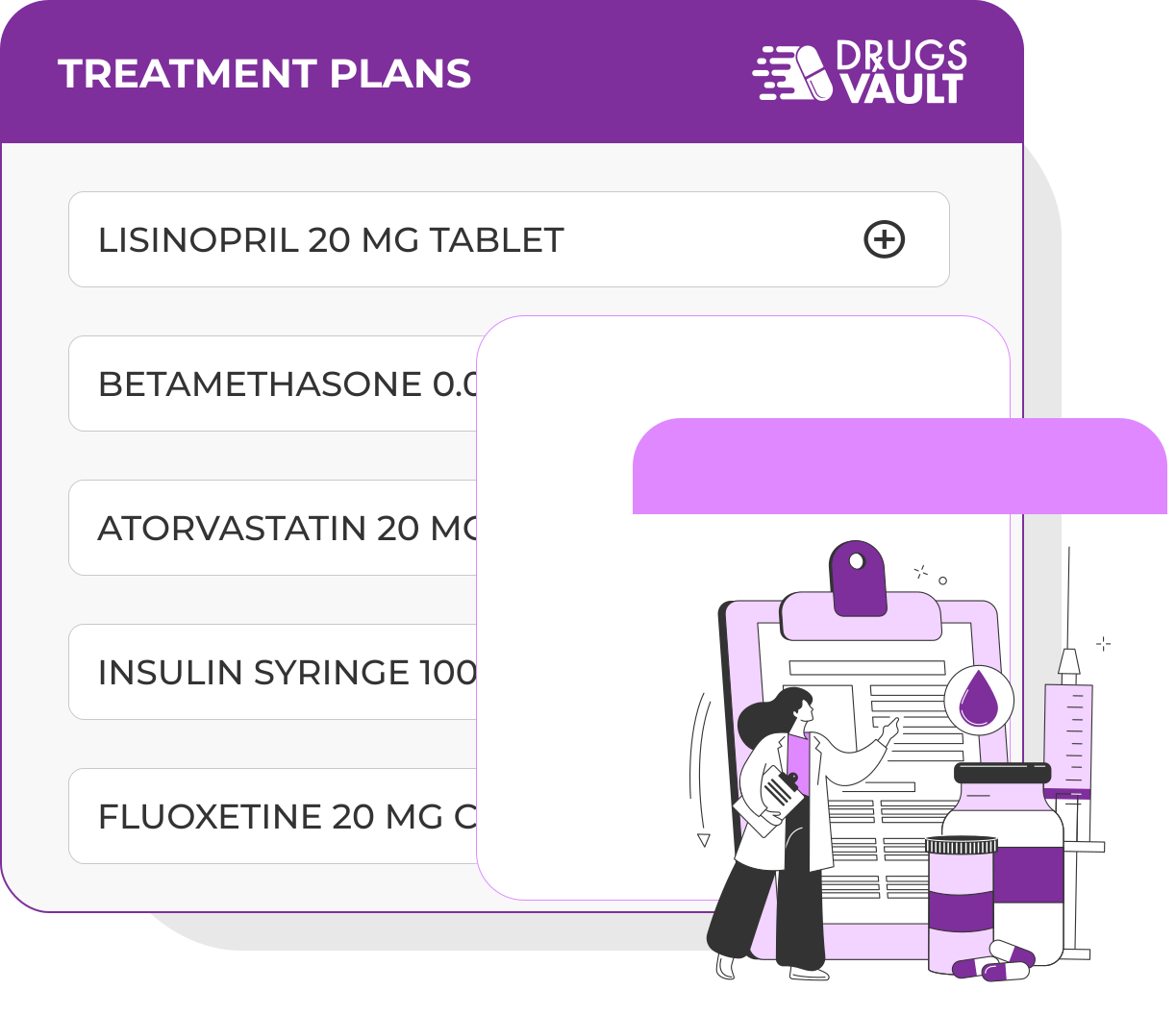
Streamline your treatment protocols with our Automated Treatment Planning System to avoid inefficient manual treatment plans and ensure your medical staff follows a protocol-driven and efficient workflow process.











Why Use Our System?
Replace Manual Protocol Development with Intelligent Automation
Our Automated Treatment Planning System eliminates the laborious and error-prone process of developing protocols manually, by employing intelligent automation based on predefined rules tailored to individual patients’ clinical circumstances. Whether for oncological therapy, chronic disease management, post-operative treatment, or rehabilitation, automated treatment planning enables every patient to follow a proven treatment plan without extra pressure on clinical staff members.
Move from manual, inconsistent therapy planning to intelligent automation that delivers protocol-driven, patient-specific care plans at speed and scale.
See System DocumentationProtocol Intelligence
Evidence-Based Automation Across Every Care Pathway
Automation built on clinical evidence, not just operational rules. Every generated protocol reflects current guidelines and adapts intelligently to individual patient data.
The system is based on an ever-updating library of treatment protocols that have been tested for clinical efficacy using rules-based intelligent reasoning to develop customized patient treatment protocols based on existing clinical best practices. The protocol templates are periodically evaluated by clinical experts and modified to ensure adherence to the highest clinical standards.
Explore Protocol Automation
Seamless Workflow Fit
Automation That Works Within Your Existing Clinical Infrastructure
Automated planning embedded in your EHR, not bolted onto it. Clinicians gain the benefits of automation without changing the systems and workflows they already use every day.
Automation for treatment plans is built right into HL7 FHIR and RESTful API integration within current EHR documentation practices, including Epic, Cerner, and all other systems used. There are many customizable options, a sandbox, and support for onboarding to make the process quick and easy with no disruption.
View Integration OptionsConsistency at Scale
Deliver Standardized, High-Quality Care Across Every Patient
Standardized protocols, fewer deviations, measurably better outcomes. Automation removes the variability that compromises care quality when planning is done manually.
Plan generation through automation and inclusion of decision rules makes deviation from protocols and errors impossible and ensures the provision of consistent results to all patients irrespective of the caregiver who provides the care.
Learn About Care Standardization

What is the best medication API for a healthcare application?
There isn’t one universal “best” medication vendor for every product, because healthcare apps don’t…
Read Full Article
Which medication APIs are worth evaluating for a healthcare platform?
When you’re creating an entire healthcare platform and not merely an app, “worthy of…
Read Full Article
How can Healthcare Companies choose a trusted Drug API for Medication Data?
In healthcare, “trusted” doesn’t mean popular or interesting to demonstrate. This term denotes something…
Read Full Article
How to choose an enterprise drug database vendor?
In enterprise healthcare, drug data isn’t something you “download and move on.” It’s a…
Read Full Article
How Pharmaceutical APIs Help Healthcare Companies Scale Drug Intelligence
Most healthcare companies start with “drug knowledge” as content, PDFs, static references, scattered vendor…
Read Full Article