
Today’s pharmaceutical innovation requires speed, precision, and improved decision making. The process of developing and launching a novel therapy is long and involves many steps, and each of these steps results in huge amounts of information being generated. From the initial stages of Drug Development to clinical trials and finally launching the drug, pharmaceutical companies are in dire need of more efficient ways of interpreting the information and acting upon it. This is precisely why data analytics in pharma, supported by platforms like DrugsVault, is turning out to be such a significant aspect of innovation today.
The value of data analytics in pharma is more than just reporting or dashboards. Data analytics in pharma is also used by pharmaceutical organizations to discover patterns, eliminate inefficiencies, and make more informed decisions in R&D. As pharmaceutical organizations become more connected and technology-driven, the interrelationship of data analytics in healthcare, healthcare data analytics, and AI in drug development is creating a smarter future for Drug Development. Stronger pharmaceutical data analytics and better pharma data management are now central to how companies improve speed, accuracy, and innovation.
Why Data Matters in Modern Drug Development
One of the most data-intensive processes in the field of healthcare, Drug Development involves a range of activities, from research, testing, validation, and regulatory review, to performance monitoring. In all these stages, there is a need for visibility on what works, what is changing, and where there are potential risks.
Without data visibility, decisions can be slow and imprecise. Pharmaceutical organizations require means to convert large and complex data sets into useful insights that guide decisions.
At this point, pharmaceutical data analytics is of use in helping organizations make decisions from information.
What Data Analytics Means in the Pharma Industry
Data analytics in pharma in the pharma industry is simply defined as the collection, organization, analysis, and interpretation of information in order to make better decisions. The information could be derived from sources such as research, clinical trials, and operations.
The goal is not just to gather more data. The goal is to make data useful. When teams can work with information that is clean, connected, and understandable, they can move faster and with more confidence.
That is why pharma data management matters so much. It creates the structure that allows analytics to work effectively across teams and systems.
How Pharma Companies Use Data Analytics Across Drug Development
Pharma companies use analytics throughout the Drug Development process to improve both speed and precision. These use cases often include:
- Identifying promising compounds faster
- Improving target selection and research efficiency
- Supporting preclinical and clinical decision-making
- Monitoring safety, efficacy, and trial performance
These capabilities enable teams to target their efforts more effectively and minimize delays due to uncertainty or incomplete information.
In the Drug Development process overall, analytics helps to transform complexity into more informed action.
The Role of AI in Drug Development
AI is becoming an important extension of traditional analytics because it can process complex data sets more efficiently and identify patterns that may be difficult to detect.
In practice, AI can assist with:
- Pattern detection across large research datasets
- Predictive modeling for outcomes and risk
- Research prioritization based on emerging signals
- Faster analysis of clinical and operational information
This is why AI in drug development is gaining traction. It is helping teams move away from retrospective analysis and towards forward-looking analysis.
Data Analytics in Clinical Trials
Perhaps the best example of how data analytics can benefit pharmaceutical companies is in clinical trials. In clinical trials, enormous data is used, and timely data insights are required to complete clinical trials.
Data analytics can benefit clinical trials in several ways:
- Patient selection and recruitment
- Real-time monitoring of trial progress
- Identification of risks, trends, and inefficiencies earlier
- Tighter adjustments in protocols and data quality
This is an area where data analytics in healthcare can be particularly useful. It can enable better links between clinical data and operational insights to support better decisions in the clinical trials process.
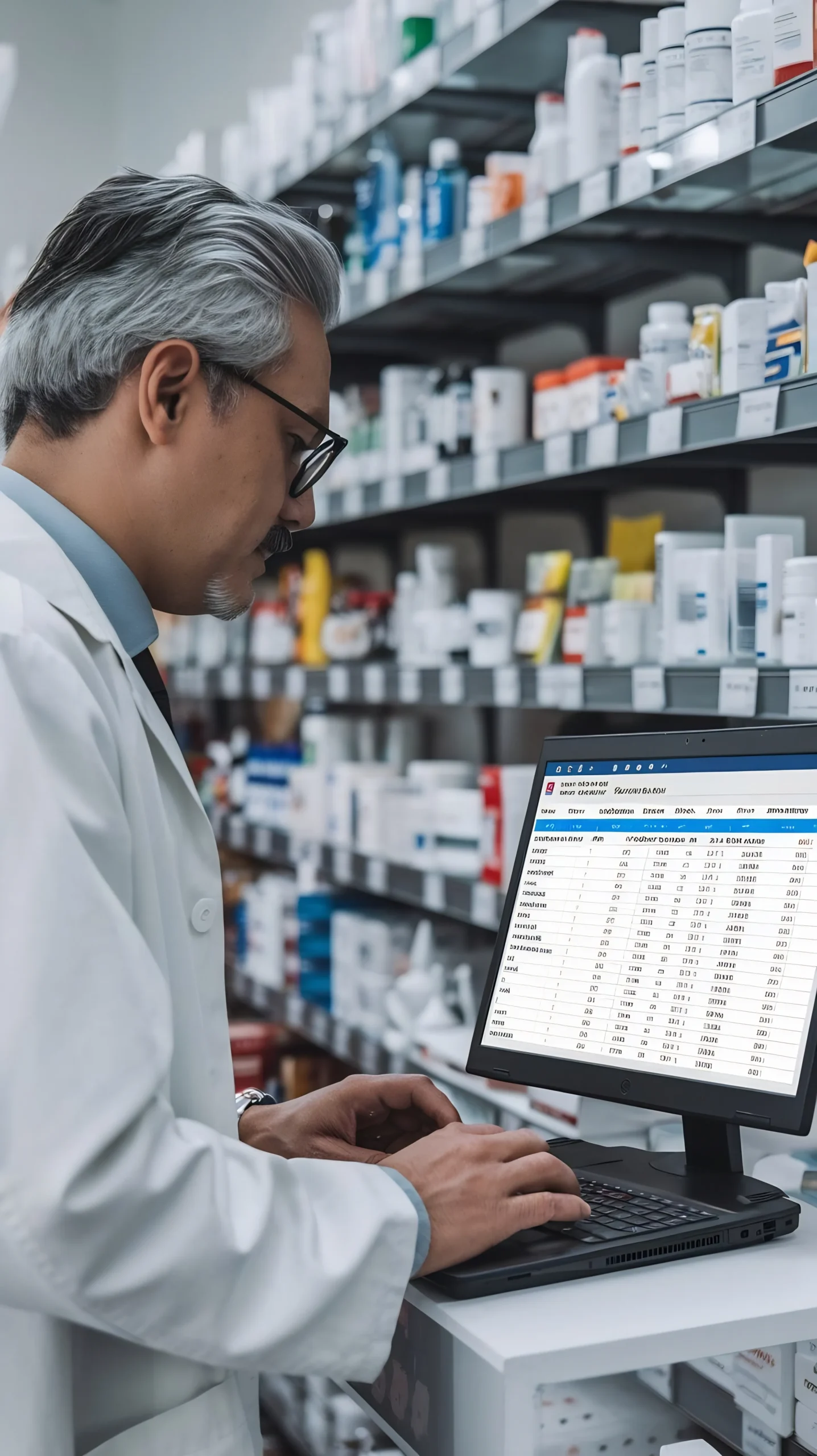
How Pharma Data Management Supports Better Outcomes
The effectiveness of analytics and AI solutions is only as good as the data used to power them. If data is fragmented, inconsistent, or hard to access, analytics and AI solutions may not be able to provide much benefit.
Good pharma data management is key to addressing this by creating environments that have cleaner, more connected, and more governed data. This also enables silos in research, clinical, regulatory, and commercial organizations to be reduced.
When data foundations are good, organizations have what it takes to scale analytics, collaborate, and ensure more reliable innovation.
Benefits of Pharmaceutical Data Analytics
Pharmaceutical organizations are embracing analytics because they have clear benefits. These often include:
- Faster research and development cycles
- Better decision-making across teams
- Reduced operational inefficiencies
- Better support for compliance and reporting activities
- Increased confidence in development strategies
This list of benefits demonstrates why healthcare data analytics is becoming an increasingly important aspect of pharmaceutical innovation. More understanding means better prioritization, better coordination, and better execution.
Challenges Pharma Companies Face
Despite having these goals in place, pharma companies are facing challenges in utilizing data in an effective manner. Common issues include:
- Large and fragmented datasets
- Data quality and consistency problems
- Integration challenges across systems
- Regulatory and compliance complexity
- Difficulty turning raw data into timely insight
These are the very reasons why pharmaceutical data analytics and pharma data management are so important. Otherwise, the information will go to waste, and decision-making will be more complex than it needs to be.
The Future of Data-Driven Drug Development
The future of pharmaceutical innovation will be characterized by interconnected, smart, and predictive systems. This is already being achieved in terms of:
- More accurate predictive analytics for trial and safety results
- Greater collaboration between research, regulatory, and commercial groups
- More adoption of interconnected platforms and smart automation

As this evolution continues, AI in drug development and data analytics in pharma will be even more important in assisting organizations in their efforts to innovate more effectively.
Conclusion
The field of data analytics is changing the way pharma firms are conducting their research and development activities. This is because, in the pharma industry, speed, precision, and compliance are critical, and the effective use of data is where the competition lies.
When data analytics in healthcare, healthcare data analytics, data analytics in pharma, pharmaceutical data analytics, pharma data management, Drug Development, and AI in drug development are used in conjunction with each other, it can assist Pharma Companies in better visibility, better decision-making, and faster innovation. The future of pharmaceutical progress will belong to organizations that know how to turn better data into better action.
FAQs
How do pharma companies use data analytics in drug development?
Pharma companies use analytics to improve research efficiency, monitor clinical trial performance, identify risks earlier, and support better decision-making across the drug development lifecycle.
Why is pharma data management important?
Pharma data management is important because it keeps research, clinical, and operational data structured, connected, and usable, which is essential for analytics and AI success.
What is the role of AI in drug development?
AI in drug development helps analyze large and complex datasets, detect patterns faster, support predictive modeling, and improve research prioritization across pharmaceutical workflows.
Make Better Drug Development Decisions with DrugsVault
Discover how DrugsVault helps pharma teams organize data, uncover insights, and move research forward with greater speed and clarity.