Care Planning Built for Teams, Not Silos
Collaborative Care Plan Platform for Multi-Provider Coordination
Get all the service providers who have to do with the treatment plan of the patient on one common platform using our Collaborative Care Plan tool for real-time collaborative authoring, reviewing, and planning of care plans.








Why Use Our Platform?
Replace Fragmented Care Planning with True Team Collaboration
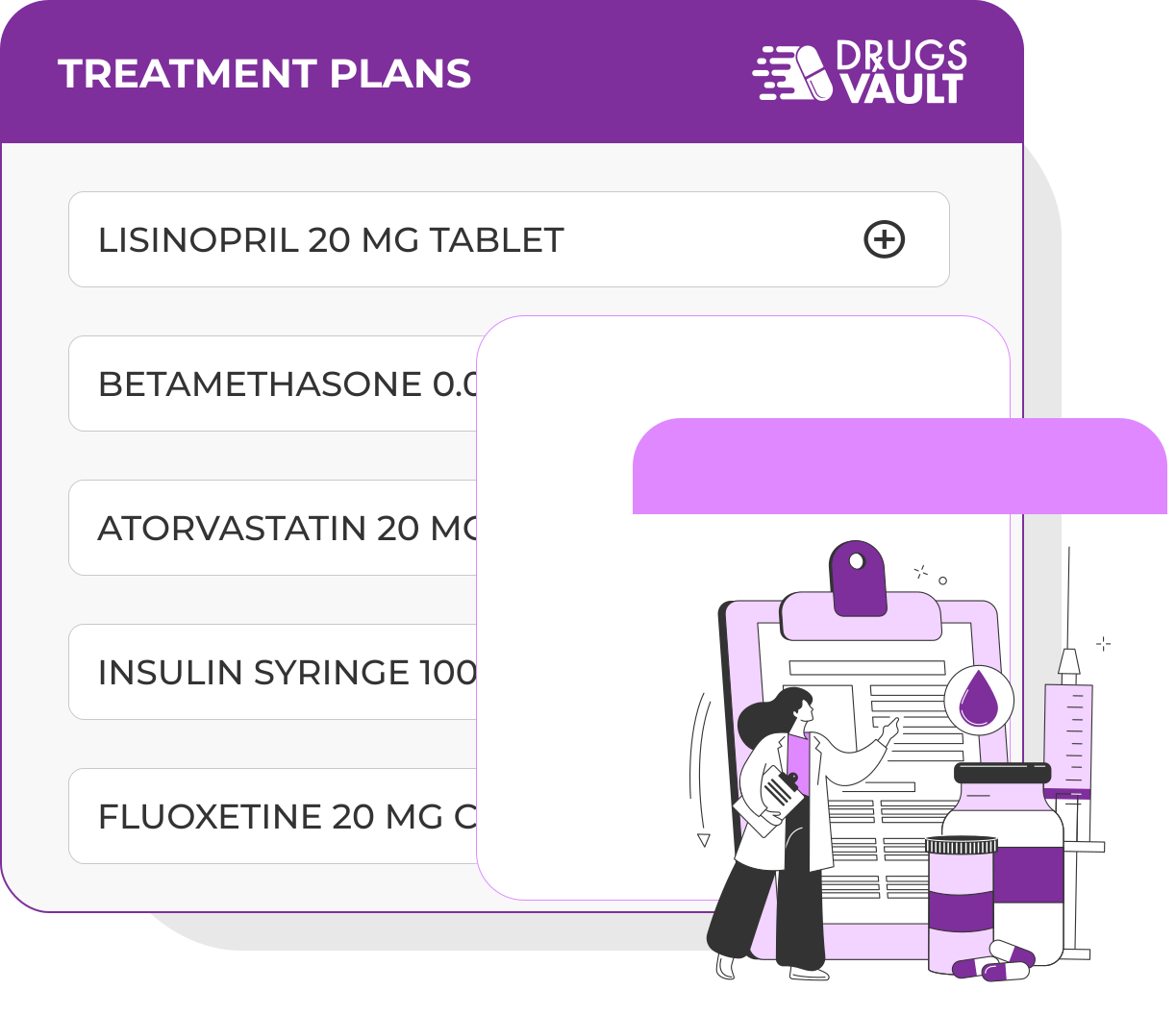
With our Collaborative Care Plan Platform, each member of the healthcare team will be able to access one unified treatment plan. All physicians, nurses, pharmacists, therapists, and care coordinators will participate in building this plan according to their own roles, making sure that all perspectives are taken into account and no decisions are made without the knowledge of the entire team.
Make treatment planning a genuinely collaborative process where every provider contributes, every voice is heard, and every patient benefits.
See Platform DocumentationReal-Time Collaboration
Every Provider Working from One Shared, Live Plan
Simultaneous multi-provider access, real-time updates, and instant notifications. No more version conflicts, outdated copies, or missed updates across the care team.
This software enables real-time collaboration and reviewing of treatment plans through role-based permissions, real-time updates, and comprehensive version-controlled changes. All members of the healthcare team can always view the latest plan, thus overcoming any miscommunication that could result from using disparate, standalone planning tools.
Explore Collaboration Features
EHR Connected
Collaborative Plans Linked to Your Existing Clinical Systems
Collaboration built on top of your EHR data, not disconnected from it. Every shared plan is synchronized with the patient record that every provider already relies on.
Integrating HL7 FHIR allows the platform to integrate seamlessly with Epic, Cerner, and any other popular EHR system, thus integrating collaboration in planning with the clinical workflow, as well as keeping the shared plans updated with the rest of the patient’s record. A robust API, comprehensive documentation, and extensive onboarding are guaranteed.
View Integration OptionsCoordinated Outcomes
Better Coordination Translates Directly into Better Patient Care
Aligned providers, fewer care gaps, stronger patient outcomes. True multidisciplinary collaboration delivers a quality of coordinated care that no single provider or siloed tool can match.
Organizations implementing collaborative care planning processes have been shown to achieve tangible improvements in closing care gaps, avoiding conflicting interventions, and enhancing patient outcomes in areas including chronic disease management, post-acute care, and multi-disciplinary care services.
Learn About Coordination Outcomes

Drug Interaction APIs: Features Every Healthcare Application Should Have
In 2026, interaction checks aren’t a “nice add-on.” They’re a baseline safety feature because…
Read Full Article
Drug Data Licensing: Everything Healthcare Companies Need to Know
Modern healthcare apps run on medication content, identifiers, and clinical reference data. That means…
Read Full Article
How to Integrate Drug Data into EHR and EMR Systems
In 2026, medication workflows are too complex, and the cost of inconsistency is too…
Read Full Article
Drug Database vs Drug API: Which One Does Your Healthcare Application Need?
Though this choice may seem technical on paper, it is actually one that influences…
Read Full Article
Drug Data APIs vs Traditional Pharmaceutical Databases: What Enterprises Should Choose
Enterprise healthcare teams are modernizing medication workflows, analytics, and patient safety tooling fast, but…
Read Full Article
Best Drug Target Databases in the USA Healthcare Industry for Pharma Research in 2026
In 2026, discovery teams are being pushed in two directions at once: faster cycles…
Read Full Article
What is pharmaceutical research data and why does it matter?
The work in pharma R&D is frequently imagined to involve lab benches, microscopes, and…
Read Full Article
The Future of Drug Discovery: How AI Is Transforming Pharmaceutical Research in 2026
2026 feels different because AI in pharma is no longer a “nice experiment” running…
Read Full Article
Why a Drug Database Is Essential for Patients and Healthcare Providers
Medication decisions shape outcomes, safety, and trust. A missed interaction, unclear dosage instruction, or…
Read Full Article
What is a Drug Database? A Complete Guide for Developers, Researchers & Clinicians
Drug information is the foundation of safe care, accurate research, and reliable healthcare software.…
Read Full Article
Best Drug Database Tools for Checking Drug Interactions and Dosage
The accuracy of medication selection relies on access to trustworthy pharmaceutical information at the…
Read Full Article
Top Benefits of Using a Drug Database for Safe Medication Management
Proper administration of medications requires proper information. In the health care industry, any lack…
Read Full Article
AI in Drug Data Management: How Technology Is Enhancing Healthcare
Healthcare is becoming more data-driven, more connected, and more technology-enabled than ever before. As…
Read Full Article
Top Drug Database Platforms with API Integration for Healthcare Apps
The modern day healthcare apps have evolved beyond simply providing information. Consumers demand quick…
Read Full Article
What Is a Drug Database and How Does It Work in Modern Healthcare
The rapid availability of accurate, consistent, and dependable information about medications is central to…
Read Full Article
How Pharma Companies Use Data Analytics to Improve Drug Development
Today’s pharmaceutical innovation requires speed, precision, and improved decision making. The process of developing…
Read Full Article
How Hospitals Use Drug Data to Improve Patient Safety
In the hospital environment, accurate information about medication is not only desirable but also…
Read Full Article
Drug Data Standardization in the USA: Challenges & Solutions
As the United States healthcare system becomes more and more digitalized, the need for…
Read Full Article
How Healthcare Companies Use Drug Data APIs
Modern healthcare depends on speed, accuracy, and connected information. When providers, Speed, accuracy, and…
Read Full Article
What Is Drug Interaction Data in Healthcare
In the health sector, even a small drug interaction may cause significant consequences. Thus,…
Read Full Article